
Choosing your first pickleball paddle: what actually matters
By Janice · Updated 2026-07-17
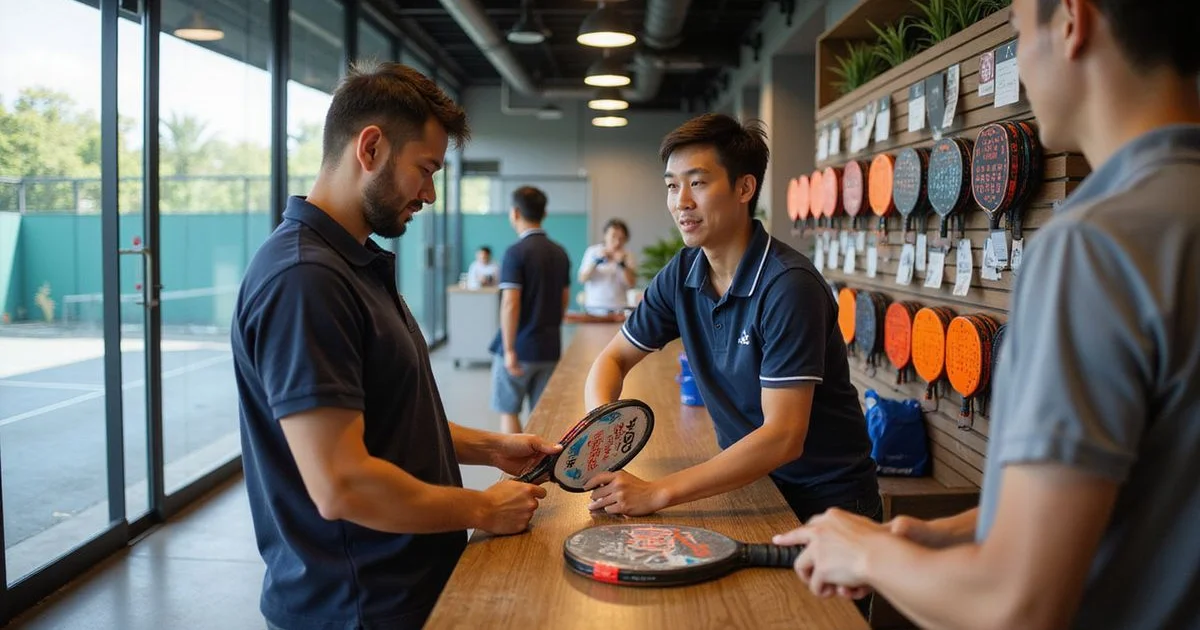
Walk into a pro shop as a first-timer and the paddle wall can be overwhelming. Here is what actually matters for a first purchase, and what you can safely ignore until later.
Weight first, everything else second
Paddle weight has the biggest effect on how a paddle feels in your hand, more than face material or core construction. Lighter paddles, generally under 200g, are easier to maneuver and put less strain on your wrist and elbow, which matters if you are new to racquet sports entirely. Heavier paddles, above roughly 220g, add power to your shots but require more arm strength to control over a long session.
For a first paddle, midweight, somewhere around 200-220g, is the safest starting point. It gives you a workable balance of control and power while you are still figuring out your own playing style, and it is forgiving enough that a slightly wrong choice will not ruin your early sessions.
Grip size matters more than most beginners realize
A grip that is too small forces you to squeeze harder to keep control, which tires your forearm fast and can contribute to soreness after longer sessions. Too large, and you lose feel for the paddle face. Most pro shops will measure your hand or let you try a few grip sizes in person, which is worth doing rather than guessing from an online size chart.
Face material and core: don’t overthink it yet
Paddle faces are typically graphite, carbon fiber or a composite blend, and core material is usually a polymer honeycomb. These affect feel and power at the margins, but as a first-time buyer, the difference will not be obvious to you yet. Save the deep dive into face and core material for your second or third paddle, once you have enough court time to actually feel what you prefer.
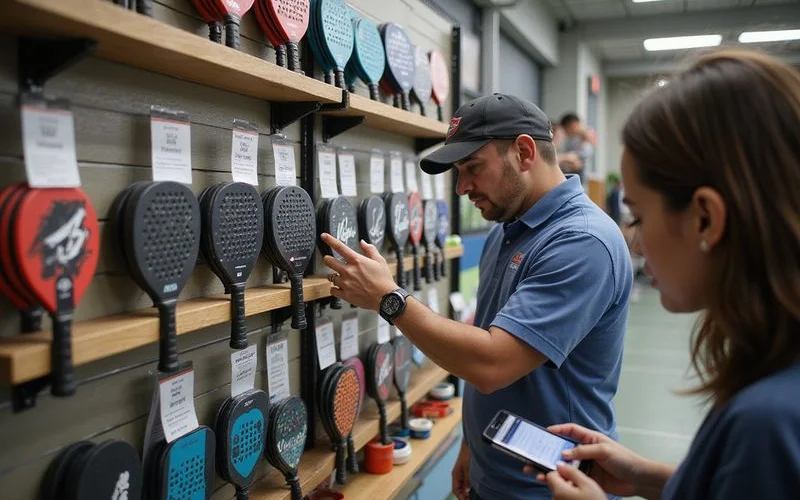
What to prioritize, in order
| Priority | What to check | Why it matters most |
|---|---|---|
| 1 | Weight (aim for midweight) | Biggest effect on comfort and control |
| 2 | Grip size (try in person) | Wrong size causes fatigue and soreness |
| 3 | USA Pickleball approval | Required if you plan to play sanctioned tournaments |
| 4 | Face material | Marginal difference for beginners |
| 5 | Price tier | Entry-to-mid range is enough to start |
Buy, rent, or borrow first
If a venue near you rents paddles, use that to your advantage before buying. Renting is often bundled into your first court booking, so ask when you reserve a session. A couple of sessions with a rental paddle will tell you more about your weight and grip preference than any spec sheet will. Once you have played a handful of times and have a sense of what feels right, an entry-to-mid range paddle, typically RM120-300, is more than enough to learn and improve on for months.
Skip premium or pro-tier paddles for your first purchase. They are built around preferences that take real playing experience to develop, and a beginner usually cannot tell the difference in a way that justifies the extra cost yet.
Checking for tournament approval
If there is any chance you will play sanctioned tournaments down the line, check that your paddle carries USA Pickleball approval before buying, since non-approved paddles are barred from official competition play. Established brands typically list this clearly on the packaging or spec sheet, but it is worth confirming rather than assuming, particularly with lesser-known brands or heavily discounted models.
Caring for your paddle once you own one
A paddle is a relatively small purchase, but a few habits extend its life. Keep it out of direct sun and extreme heat when not in use, since prolonged heat exposure can affect the face material over time, which matters in Klang Valley’s climate if you leave gear in a hot car. Wipe the face down after outdoor sessions, since dust and grit can wear down the surface texture faster than expected. A paddle cover, often included or sold cheaply alongside the paddle itself, is worth using if you are transporting it regularly between venues.
When to consider an upgrade
Most beginners get several months, sometimes over a year, of solid use from an entry-to-mid range first paddle. Consider upgrading once you have a clear sense of your playing style, whether you favor power or control, and can articulate what specifically you want a new paddle to do differently. Upgrading before you reach that point usually means guessing at preferences you have not developed yet.
If you are ready to browse, the pro shop and equipment rental hub lists venues across Klang Valley where you can try paddles in person, scored using the approach explained in our scoring method. Or head back to the homepage to compare courts and coaching options while you shop around.
Common questions
- What paddle weight is best for beginners?
- Midweight paddles, generally in the 200-220g range, suit most new players. Lighter paddles give more control and are easier on the arm; heavier ones add power but tire your wrist faster while you are still building technique.
- Does paddle face material matter for a first paddle?
- It matters less than beginners assume. Graphite and carbon fiber faces are common and both perform well at entry level. Focus on weight and grip fit first; you can chase material differences once you know your playing style.
- How much should I expect to spend on a first paddle?
- Entry-level paddles typically start around RM120, with mid-range options landing closer to RM250-300. A first paddle in that entry-to-mid band is usually enough to learn on before you know what you actually want to upgrade.
- Should I rent a paddle before buying one?
- If a venue offers rentals, yes, it is worth trying two or three sessions with a rented paddle before buying. It costs little and helps you feel out grip size and weight preference before committing to a purchase.